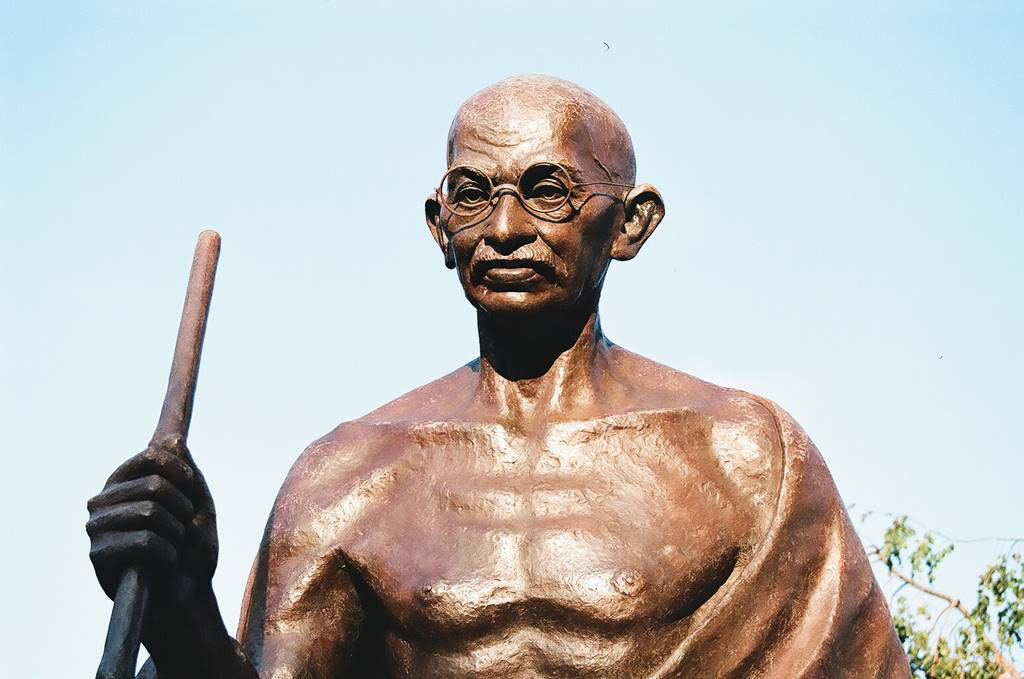



It is impossible for me to reconcile myself to the idea of conversion after the style that goes on in India and elsewhere today. It is an error which is perhaps the greatest impediment to the world's progress toward peace. Why should a Christian want to convert a Hindu to Christianity? Why should he not be satisfied if the Hindu is a good or godly man? -- Mahatma Gandhi (Harijan: January 30, 1937)
Religious freedom – it is a fundamental human right, declared not only by the United Nations’ Universal Declaration of Human Rights, Article 18, but most democratic nations. That every individual “has the right to freedom of thought, conscience and religion; this right includes freedom to change his religion or belief, and freedom, either alone or in community with others and in public or private, to manifest his religion or belief in teaching, practice, worship and observance.”
And while Article 18 of the Universal Declaration set forth an ideal for religious freedom, only the International Covenant on Civil and Political Rights (ICCPR) and the International Covenant on Economic, Social and Cultural Rights (ICESCR) have binding, legal effect. Both the ICCPR and ICESCR were not adopted until 1976, and only after significant conceptual modification so as to address the perceived failure of the original language to take into the account the cultural and religious context of other religious traditions, namely Islam.
Article 18 of the ICCPR reads:
§1 Everyone shall have the right to freedom of thought, conscience and religion. This right shall include freedom to have or to adopt a religion or belief of his choice, and freedom, either individually or in community with others and in public or private, to manifest his religion or belief in worship, observance, practice and teaching.
§2 No one shall be subject to coercion which would impair his freedom to have or to adopt a religion or belief of his choice.
§3 Freedom to manifest one's religion or beliefs may be subject only to such limitations as are prescribed by law and are necessary to protect public safety, order, health, or morals or the fundamental rights and freedoms of others.
§4 The States Parties to the present Covenant undertake to have respect for the liberty of parents and, when applicable, legal guardians to ensure the religious and moral education of their children in conformity with their own convictions.
Yet today, 60 years after the conception of the Universal Declaration of Human Rights and despite some corrective measures made in Article 18 of the ICCPR to include more diverse understandings of religious freedom, this inalienable right stands compromised for billions around the world. Religious freedom, as defined currently, has, at the expense of pluralist and non-exclusivist religious traditions, failed to acknowledge or address religious freedom as it relates to the right to retain one's tradition and to be free from harassment, intimidation and exploitative and predatory proselytization resulting in forced, fraudulent or coerced conversions by non-pluralist and exclusivist religions.
In every sense, non-pluralist religions are diametrically oppositional to traditionally pluralist religious traditions. Non-pluralist religions claim exclusivity in their belief system’s legitimacy as the only religious and spiritual path and demand exclusive adherence. In contrast, pluralist religious traditions, including most Eastern, non-Abrahamic and indigenous religious traditions, have a more expansive ethos at their core--that one's religion may not be the exclusive source of Truth and which acknowledge the potential of multiple legitimate religious and spiritual paths. Most pluralist religious traditions are also non-exclusivist, thus allowing for the assimilation beliefs and traditions of another religion without requiring the relinquishment of one's own religion or conversion to the other. These differences, however subtle or overt, will always result in asymmetries in favor of non-pluralist religions if the understanding of religious freedom and rights and protections proffered by international law are left unchanged.
It is this failed understanding of religious freedom that has also manifested in flagrant violations of §2 of the ICCPR. Religious freedom has been denied to so many adherents of pluralist religious traditions because the world community has for too long turned a blind eye to forced, fraudulent and coerced conversion by non-pluralist and exclusivist religions -- conversions that have been carried out for centuries in various parts of the world, including Africa, North and South America, Asia, the Middle East and Europe. And today, this collective complacency has bred a surge in international campaigns which harass, intimidate and exploit the most vulnerable segments of society by, among other ethically questionable methods, conditioning humanitarian aid on economic, educational, medical or social assistance upon conversion and overtly denigrating other religions to intentionally promote religious hatred and bigotry (hate speech) and violence. These international campaigns are responsible for creating deep and open conflict throughout the world and deny a vast majority of the world's people their religious freedom.
We at the Hindu American Foundation hold that the integrity of Article 18 of the United Nations’ Universal Declaration of Human Rights and ICCPR is endangered today as a result of the failure to incorporate more pluralist understandings of religious freedom and complacency towards forced, fraudulent and coerced conversions. As such, religious freedom, as it stands today, is perversely at odds with tolerance, pluralism and most importantly, peace within and without national borders. The Hindu American Foundation calls upon the international community for the following modifications:
Be it resolved:
· Article 18 of the United Nations' Universal Declaration of Human Rights be amended as follows (in bold italics):
Everyone has the right to freedom of thought, conscience and religion; this right includes freedom to retain, adopt or change his religion or belief, and freedom, either alone or in community with others and in public or private, to manifest his religion or belief in teaching, practice, worship and observance.
· Article 18 of the ICCRP be amended, in part, as follows (in bold italics):
§1 Everyone shall have the right to freedom of thought, conscience and religion. This right shall include freedom to have, retain or to adopt a religion or belief of his choice, and freedom, either individually or in community with others and in public or private, to manifest his religion or belief in worship, observance, practice and teaching.
§2 No one shall be subject to force, fraud and/or coersion, including but not limited to harassment, intimidation or exploitation, including but not limited to the conditioning of humanitarian aid or economic, educational, medical or social assistance upon conversion and/or overt denigration of other religions to intentionally promote religious hatred and bigotry (hate speech) and violence, which would impair his freedom to have or to adopt a religion or belief of his choice.
· Demand assembly-member governments to enforce and implement preventative measures to enforce §2 of the ICCPR.
· Demand assembly-member governments to monitor more closely, prosecute and condemn violations of §2 of the ICCPR.
· Facilitate cooperation between pluralist and non-pluralist religions to develop ethical guidelines for interfaith dialogue and interaction, proselytization and conversion.
The pdf version of this policy brief can be downloaded here.
HAF sent a letter on Ms. Navanethem Pillay, UN High Commissioner for Human Rights, on the 60th Anniversary of the Universal Declaration of Human Rights. The letter, which can be downloaded by clicking here, touches upon many of the points covered in the above policy brief.