Hindu American Foundation
910 Seventeenth Street NW, Suite 315
Washington, DC 20006
T: (202) 223-8222 | F: (202) 223-8004
General inquiries: info@hinduamerican.org
Media inquiries: mat@hinduamerican.org
Hindu American Foundation is a 501(c)(3) nonprofit organization.
All content © 2003-2023 Hindu American Foundation.
EIN: 68-0551525

Hinduism is often referred to as Sanatana Dharma (the ‘eternal way’), indicating the religion’s emphasis on eternal truths that are applicable to all of humanity. Thus, it makes sense that a medley of mainstream movies could convey Hindu ideals that resonate strongly with audiences, while not actually talking directly about anything understood by the public as Hindu.
In Groundhog Day, for example, when cynical TV weatherman Phil Collins discovers he is trapped in a time loop, living the same day over and over, only to be released after transforming his character from an egocentric narcissist to a thoughtful and kindhearted philanthropist, it’s hard not to be reminded of the Hindu notion of samsara, a cycle of reincarnation from which a soul attains liberation by realizing its divine nature after lifetimes of spiritual practice.
Or in The Matrix when Neo chooses the red pill of knowledge over the blue pill of ignorance, and is subsequently unplugged from an illusory world and cast into the truth of reality, the film seems to be conveying a foundational Vedic teaching: that we must transcend our own ignorance — a product of maya, literally meaning “illusion” in Sanskrit — to uncover our true nature. Hindu concepts appear to be further exhibited in Neo’s relationship with Morpheus, which starkly reflects that of a disciple and guru, as the latter reveals to the former the knowledge he needs in order to understand this “true nature.” As Neo’s faith in Morpheus’ words develops, so does his capacity to see past the illusion of the matrix, garnering him the ability to manipulate the laws of this false reality, similar to the Jedi and yogis described earlier.
What do the Matrix, Avatar, Groundhog Day, and Star Wars have to do with Hinduism?
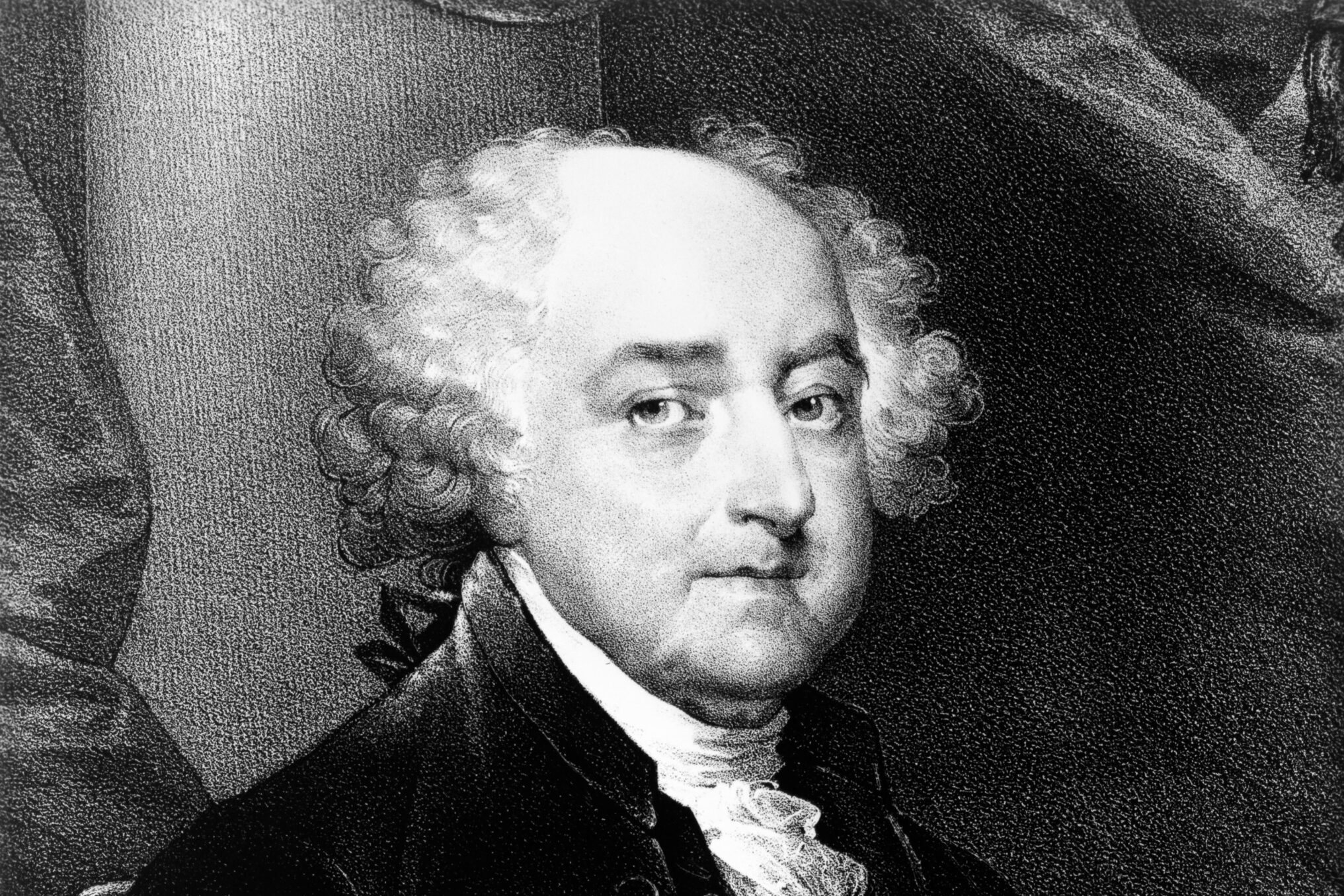
Hindu Americans and the Vedanta philosophy have significantly influenced notable intellectuals such as Henry David Thoreau, Ralph Waldo Emerson, Walt Whitman, J.D. Salinger, Christopher Isherwood, Aldous Huxley, Huston Smith, and Joseph Campbell just to name a few. Some feel that it started back In 1812, when Thomas Jefferson recommended to John Adams the writings of Joseph Priestley, a Unitarian minister who had published works that compared Christianity to other religions — Hinduism in particular — Adam’s interest was piqued.
Going through Priestley’s writings, Adams became riveted by Hindu thought, as he launched into a five-year exploration of Eastern philosophy. As his knowledge of Hinduism and ancient Indian civilization grew, so did his respect for it. This legacy took shape in the 1830s as Transcendentalism, a philosophical, social, and literary movement that emphasized the spiritual goodness inherent in all people despite the corruption imposed on an individual by society and its institutions. Espousing that divinity pervades all of nature and humanity, Transcendentalists believed divine experience existed in the everyday, and held progressive views on women’s rights, abolition, and education. At the heart of this movement were three of America’s most influential authors: Ralph Waldo Emerson, Walt Whitman, and Henry David Thoreau.
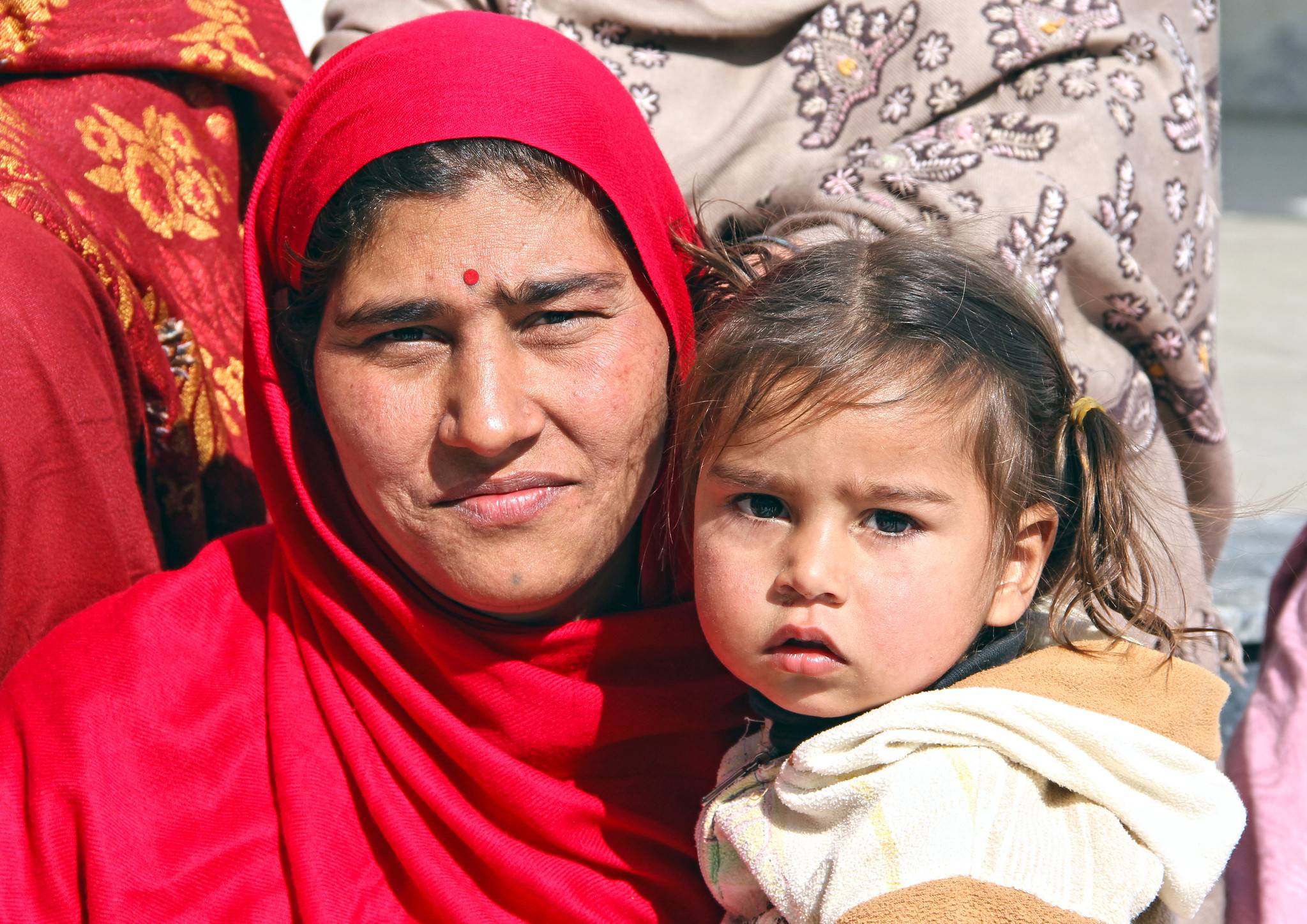
Before becoming an Islamic state, Afghanistan was once home to a medley of religious practices, the oldest being Hinduism. A long time ago, much of Afghanistan was part of an ancient kingdom known as Gandhara, which also covered parts of northern Pakistan.Today, many of Afghanistan’s province names, though slightly altered, are clearly Sanskrit in origin, hinting at the region’s ancient past. To cite a few examples, Balkh comes from the Sanskrit Bhalika, Nangarhar from Nagarahara, and Kabul from Kubha. Though Gandhara’s earliest mention can be found in the Vedas, it is better known for its connections to the Hindu epics the Mahabharata and Ramayana. There is also the historic Asamai temple in Kabul located on a hill named after the Hindu Goddess of hope, Asha. The temple has survived numerous conflicts and attacks but it still stands. The temple is a remnant from Hindu Shahi Kings, who ruled from the Kabul Valley as far back as 850 CE. However, Hindus are indigenous but endangered minorities in Afghanistan, numbering approximately 700 out of a community that recently included over 8,000 members. Many have left for new homes, include in New York which is home to a large Afghani Hindu population.
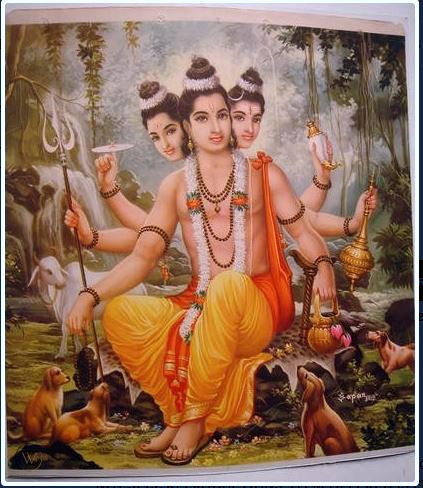
According to the 2021-2022 National Pet Owners Survey, 70% of U.S. households (90.5 million homes) owned a pet as of 2022, with 69 million U.S. households having a pet dog. Recognized for their loyalty, service, companionship, and the special relationship they have with humans, Hinduism’s reverence for dogs is expansive, as they are worshiped in festivals and appreciated in connection to a number of Hindu gods and stories. Observed in Nepal, Bhutan, and the Indian states of Sikkim and West Bengal, Kukar Tihar (the 2nd day of Tihar) honors dogs as messengers that help guide spirits of the deceased across the River of Death. In the Mahabharata, Yudhisthira, his brothers, and the queen Draupadi renounced their kingdom to ascend to the heavens. However, Yudhisthira was the only one that survived along with a dog that had joined them. Yudhisthira refused to go to heaven without the dog, who turned out to be Yamaraj, the God of Death. Sarama, the “female dog of the gods,” was famously asked by Indra to retrieve a herd of cows that were stolen. When the thieves were caught, they tried to bribe Sarama but she refused and now represents those who do not wish to possess but instead find what has been lost. The symbolic import of dogs is further driven in connection with Dattatreya, as he is commonly depicted with four of them to represent the Vedas, the Yugas, the stages of sound, and the inner forces of a human being (will, faculty, hope, and desire).
Dogs and Diwali? 5 Things to Know about Hinduism and hu(man)’s Best Friend
In 2018, the long-running Marvel comic series Black Panther, was brought to the big screen. A more prominent scene is when M’baku, a character vying for the throne of the fictional country of Wakanda, challenges T’Challa/Black Panther, and yells, “Glory to Hanuman.” However, despite dharma as an unsaid aspect of the characters’ interactions, Black Panther relies slightly more on Hindu symbolism than philosophy. But the significance of Hanuman as a transcendent deity cannot be overlooked, especially at a time when dialogues about global migration, the right to worship, and access to natural resources are becoming more overtly racialized. The film provides more than just an entertainment escape: it reimagines a world in which the current racial and theological paradigms are challenged forcefully. With the film expected to have at least several sequels, there will be more opportunities to reference Hinduism and Hindu iconography.
Why Black Panther’s References to Hinduism are Significant in Hollywood
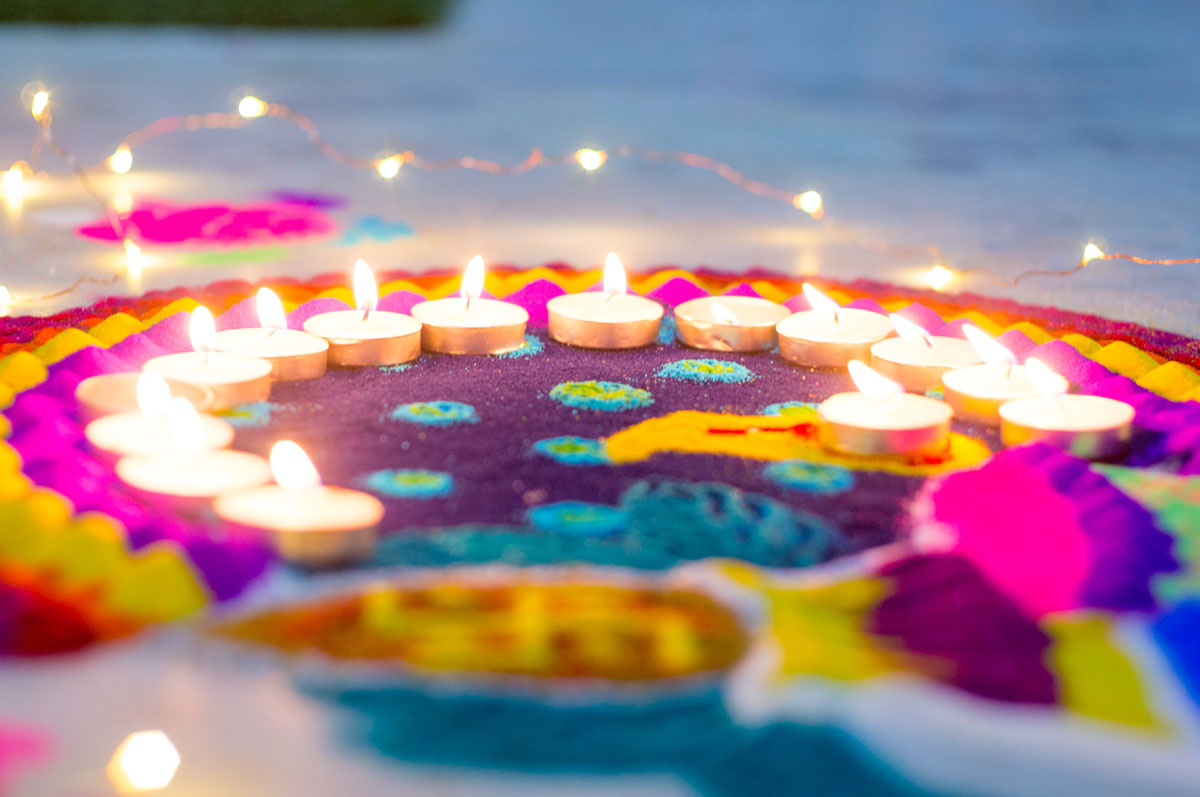
One of the most celebrated Hindu festivals, Diwali (dee-VAH-lee) or Deepavali (dee-PAH-va-lee) commemorates the victory of good over evil during the course of five days. The word refers to rows of diyas — or clay lamps — which are put all around homes and places of worship. The light from these lamps symbolizes the illumination within all of us, which can overcome ignorance, represented by darkness. Devotees gather in local temples, homes, or community centers, to spend time with loved ones, make positive goals, and appreciate life.
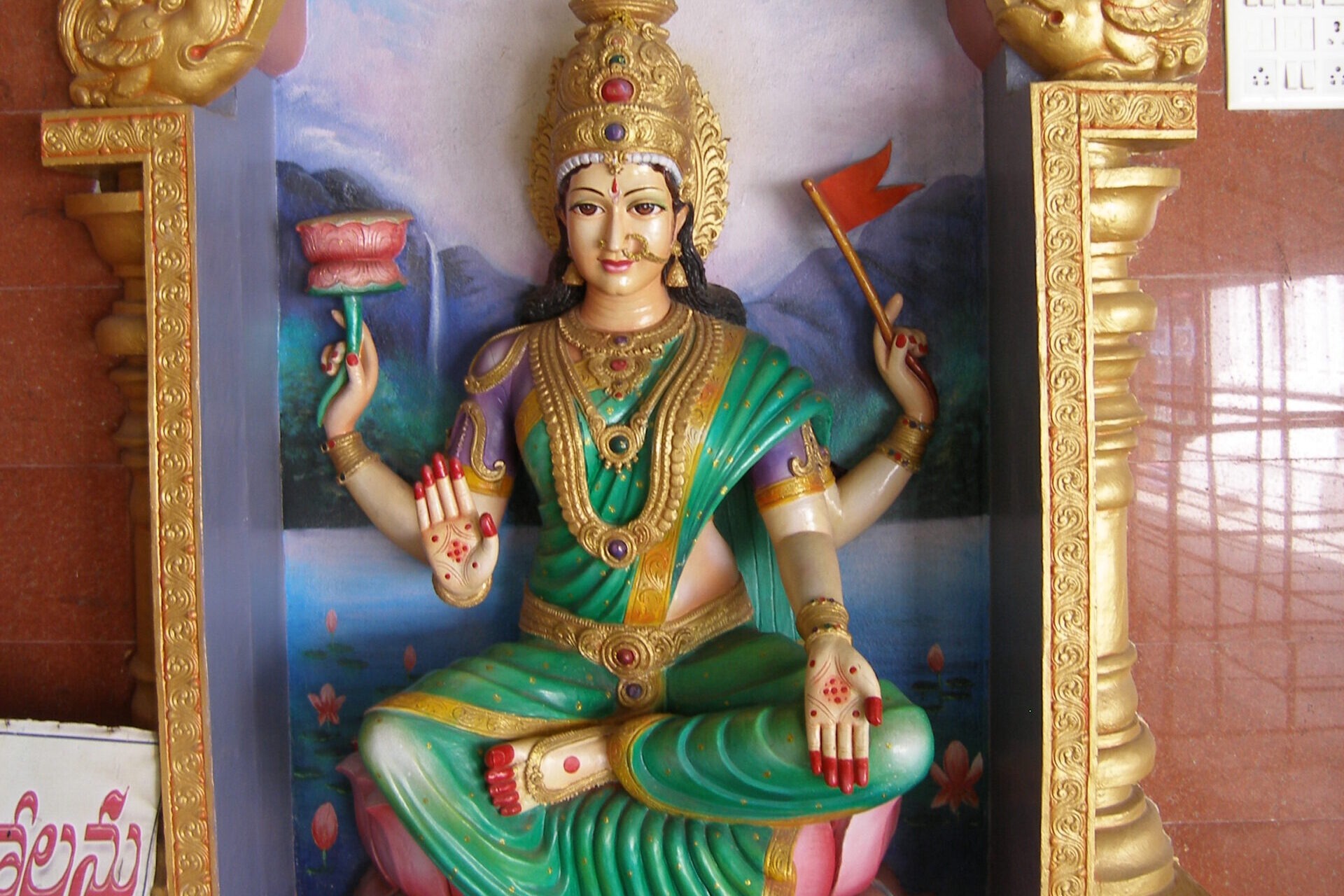
On this day, because Diwali is a time for dana (charitable giving) and seva (selfless service), Hindus traditionally perform a deep cleaning of their homes and surroundings, as cleanliness is believed to invoke the presence and blessings of Goddess Lakshmi who, as mentioned earlier, is the Goddess of wealth and prosperity. Many will also make rangoli or kolum (colored patterns of flowers, powder, rice, or sand made on the floor), which are also said to invite auspiciousness. Observers thus begin Diwali by cultivating a spirit of generosity, doing things like giving money to charities, feeding the hungry, and endeavoring to help those in need.
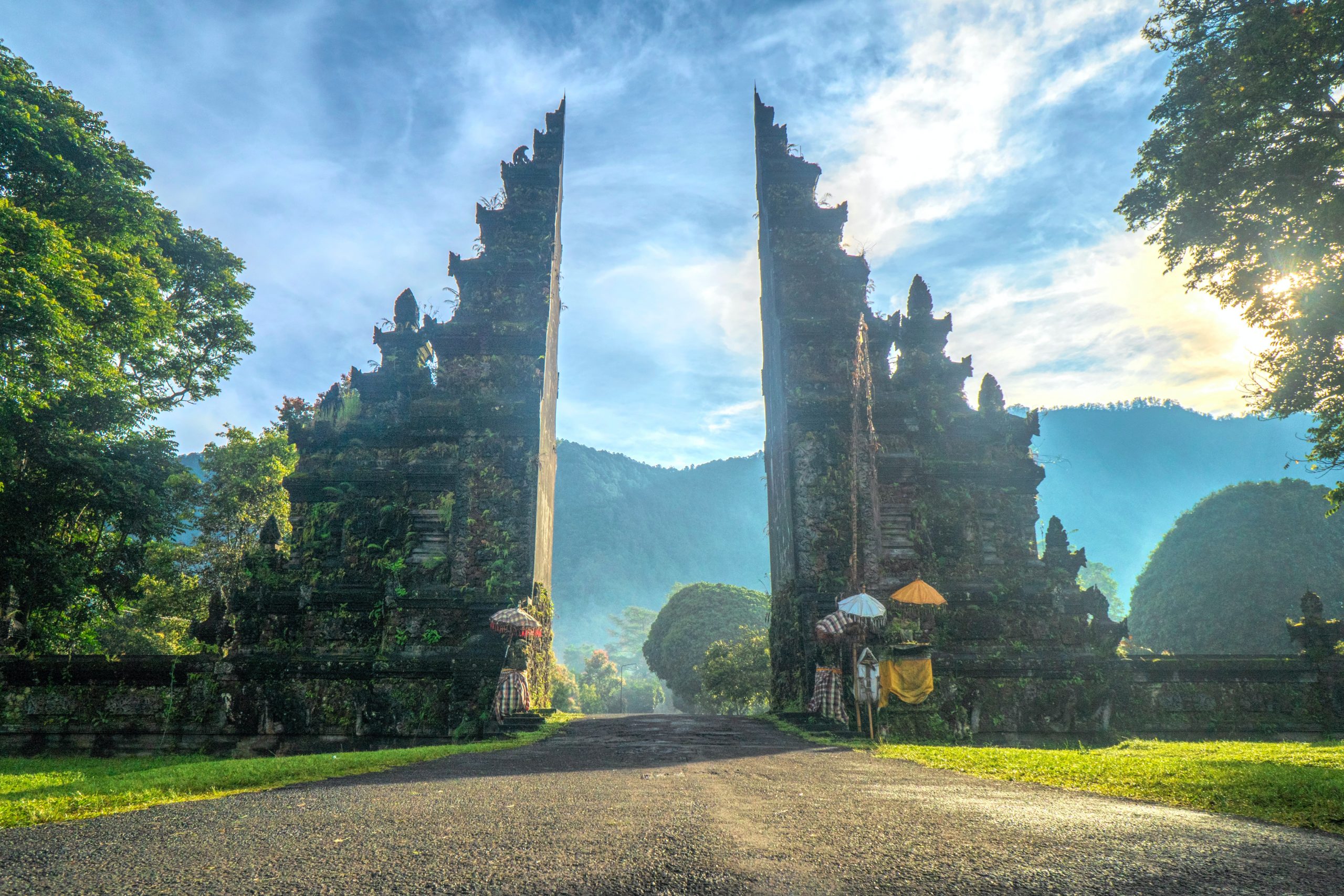
The spread of Hinduism to Southeast Asia established powerful Hindu kingdoms in the region, most notably the Khmer Empire that encompassed modern Cambodia and Thailand, and influential kingdoms in the Indonesia archipelago. Though Buddhism and Hinduism co-existed in the region for several centuries, Buddhism (and Islam in Indonesia) eventually replaced Hinduism as a primary religion. Today, there are approximately five million Hindus in Indonesia, primarily in Bali. As Bali is roughly 90 percent Hindu, this makes it a religious enclave in a country that contains the world’s largest Muslim population. There are also roughly 60,000 Cham Hindus in Vietnam, and smaller numbers in Thailand. Hinduism in Fiji, Malaysia, and Singapore is a much more recent phenomenon, with Hindus arriving in the 19th and early 20th centuries as indentured laborers. Today, Hindus are prominent in politics and business in all three countries, though they continue to experience discrimination as religious minorities.
In 2014, the first Smithsonian exhibition chronicling the experiences of Indian Americans, many of whom are Hindus, in the US was unveiled at their National Museum of Natural History in Washington, DC. This exhibit was one of the largest ever produced by the Smithsonian Asian Pacific American Center, occupying 5,000 square feet and reaching millions of visitors. The message behind “Beyond Bollywood: Indian Americans Shape the Nation,” aimed to dispel stereotypes and myths that have followed Indian immigrants since they first arrived in the U.S. in 1790. The exhibit explored the heritage, daily experiences, and the many diverse contributions that immigrants and Indian Americans have made to the United States. The exhibition at the Museum of Natural History includes historical and contemporary images and artifacts, including those that document histories of discrimination and resistance, convey daily experiences, and symbolize achievements across the professions. Music and visual artworks provide commentary on the Indian American experience and form an important component of the exhibition. In 2017, this exhibit went on the road, traveling from city to city so that all could see the impact of Indians on American culture.
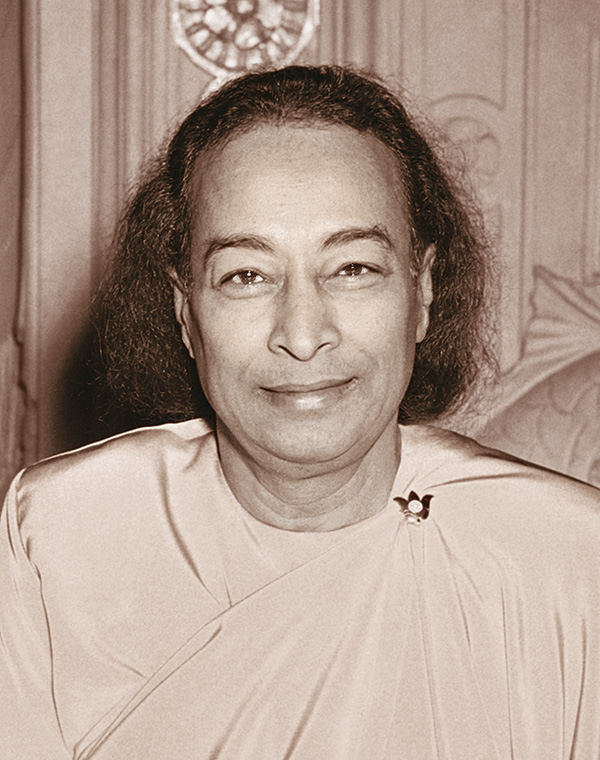
Paramahansa Yogananda was a Hindu monk and yogi who came to the United States in 1920 and lived here for the last 32 years of his life. He is considered to be the first major Hindu Guru to settle in the United States. When Swami Yogananda arrived in the US, he made his first speech, made to the International Congress of Religious Liberals, on “The Science of Religion,” and was enthusiastically received. It was soon after that he founded the Self-Realization Fellowship (also known as Yogoda Satsanga Society (YSS) of India) and introduced millions of Americans to the ancient science and philosophy of meditation and Kriya yoga (path of attainment). In 1927, he was invited to the White House by President Calvin Coolidge, making Swami Yogananda the first prominent Indian and Hindu to be hosted in the White House.
Hinduism: Short Answers to Real Questions
Countless Americans Have Been Influenced by Swami Viveknanda
For those of us who are Hindu, we have noticed that some of the biggest Hollywood films produced in the last several decades have mirrored many of Hinduism's most fundamental philosophical ideas. One example is Avatar, a film named for the Sanskrit word avatāra (‘descent’), in which the protagonist, Jake Sully, enters and explores an alien world called Pandora by inhabiting the body of an indigenous 10-foot, blue-skinned being, an idea taken from Hinduism’s depictions of the various avatars of the blue god Vishnu, who are said to descend into our world for upholding dharma. Instead of aligning with the interests of the humans, who merely want to mine Pandora for the valuable mineral unobtanium, Sully fights alongside the alien humanoids native to the world, called Na’vi, who live in harmony with nature, believe all life is sacred, and that all life is connected by a divine force — teachings synonymous with Hinduism. Thus, similar to the avatars of Vishnu, Sully defends and preserves a spiritual culture by defeating those who would destroy it for materialistic pursuit. While this film doesn’t indicate in any direct way that they have anything to do with Hinduism, it’s clear they are communicating Hindu ideas that everyone relates to and understands on a profound level.
What do the Matrix, Avatar, Groundhog Day, and Star Wars have to do with Hinduism?
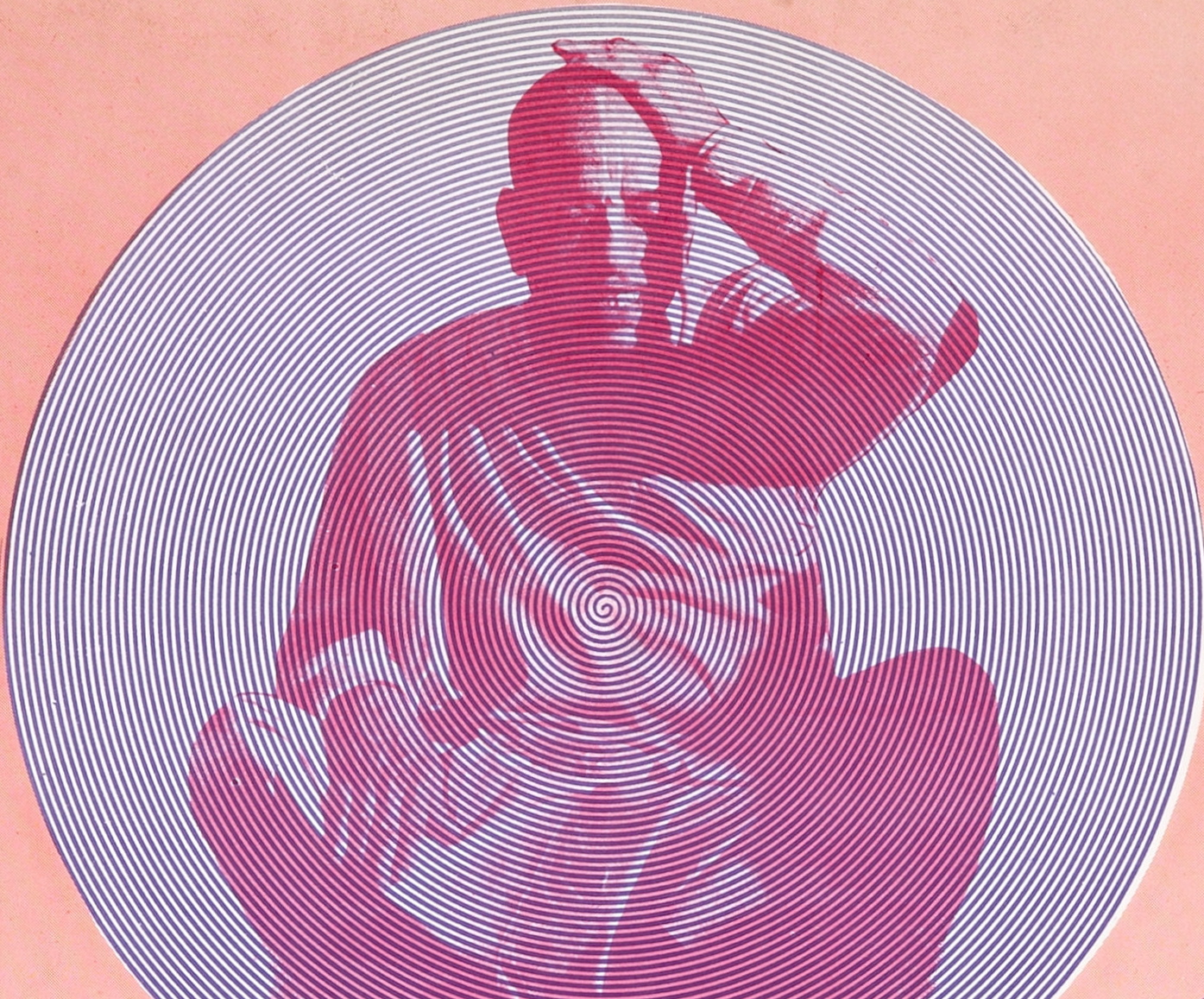
The International Society for Krishna Consciousness (ISKCON), also known as the Hare Krishna movement, was founded in 1966 by A.C. Bhaktivedanta Swami Prabhupada, a highly respected Vaishnava (devotion to the god Vishnu and his incarnations avatars) scholar and monk. At the age of 70, Swami Prabhupada traveled from India to New York City to bring the Bhakti tradition, or Krishna Consciousness, to the west. In the 11 years before his passing in 1977, Srila Prabhupada translated, with elaborate commentaries, 60 volumes of Vaishnava literature; established more than 100 temples on six continents; and initiated 5,000 disciples. Today, his writings are studied in universities around the globe and are translated into nearly 100 languages. To date, ISKCON has over 400 temples, dozens of rural communities and eco-sustainable projects, and nearly 100 vegetarian restaurants world-wide with 56 of them in the US.
Hinduism came in waves to Africa, with Southern Africa getting Hindu workers during the early years of British colonization, while East and West Africa experienced Hindu migration during the 20th century. Hinduism’s roughly 0.2% presence in Africa is seen as so inconsequential, most data organizations don’t even bother explicitly mentioning it in their census reports. But Hinduism is Ghana's fastest growing religion and one in which there are steady populations in both Northern and Southern African states. Durban is now home to most of South Africa’s 1.3 million Indians, making it, according to some sources, the largest Indian city outside of India, and thus a most powerful hub of Hindu practice. In the US, there are both communities of African Hindus who have migrated, as well as Black Hindus, who according to the 2019 Pew Survey, make up 2% of the Hindu population in the US.
George Lucas, the creator of Star Wars, drew much of the inspiration for this major cultural phenomenon from the teachings of his mentor who was a lifelong student of Vedanta. In these films, many aspects of Hinduism are interwoven with the story. Some include Hanuman (Chewbaca and Ewoks), Shakti (force,energy), Yodha (Yoda), Brahman (infinite being). Besides the many philosophical parallels that can be highlighted between Star Wars and Hinduism, Star Wars also exhibits similarities in story structure and character roles to one of India’s famous epics, the Ramayana. Never seen the movie? Now might be the time to see how universally relatable Hindu thought can truly be.
What do the Matrix, Avatar, Groundhog Day, and Star Wars have to do with Hinduism?
The term Ayurveda is derived from the Sanskrit words ayur (life) and veda (science or knowledge), translation to the knowledge of life. Ayurveda is considered to be the oldest healing science, originating in 1000 BCE. Based on the five elements that comprise the universe (space, air, fire, water, and earth), they combine and permutate to create three health principles that govern the functioning and interplay of a person’s body, mind, and consciousness. These energies are referred to as doshas in Sanskrit. Ayurveda can be used in conjunction with Western medicine and Ayurvedic schools have gained approval as educational institutions in several states.
5 Things to Know About Ayurveda
In Hinduism, What is the Relationship Between Spirituality and Health?
While it’s synonymous to meditation, and seen simply as a doorway to tranquility for yogic practitioners, the true meaning of Om is deeply embedded in Hindu philosophy.
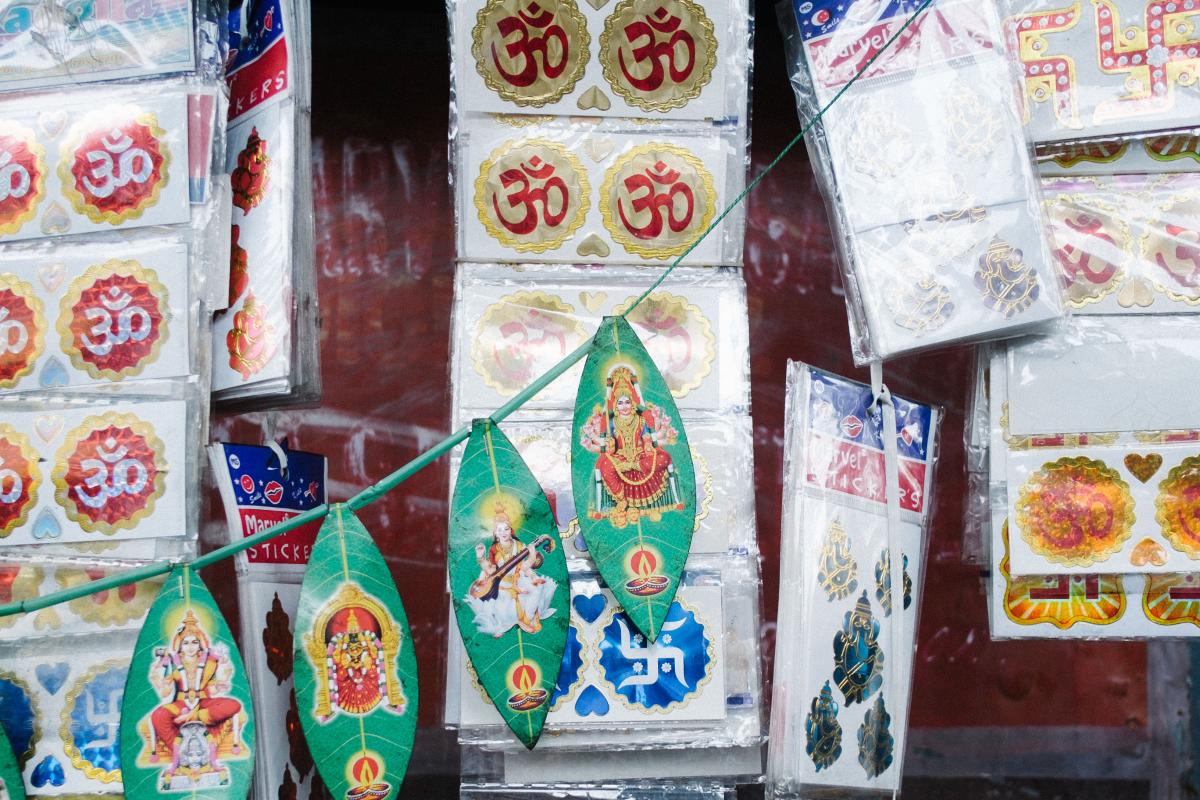
The word Om is defined by Hindu scripture as being the original vibration of the universe, which all other vibrations are able to manifest. Within Hinduism, the meaning and connotations of Om is perceived in a variety of ways. Though heard and often written as “om,” due to the way it sounds when it is repeatedly chanted, the sacred syllable is originally and more accurately spelled as “aum.” Broken down, the three letters of A – U – M represent a number of sacred trinities such as different conditions of consciousness (waking state, dreaming state, and deep sleep state), the deities in charge of the creation, preservation, and destruction of the universe ( Brahma, Vishnu, and Shiva), aspects of time (past, present, and future), among many others.
Dr. Anandi Gopal Joshi is credited with being the first woman from India to study medicine in the United States. Born in Bombay in 1865, she was married at the age of ten to an older man who had been her teacher. Dr. Joshi had a child at the age of 13, but the child died when only 10 days old. She believed that with better medical care, the child would have lived, and she frequently cited this as motivation for her desire to attend medical school. Her husband encouraged her in her academic pursuits and in 1883, Joshee joined the Woman’s Medical College of Pennsylvania, now known as the Drexel University College of Medicine in Philadelphia. She graduated in 1886 with her degree in medicine; her M.D. thesis focused on Hindu obstetrics. Unfortunately, Dr. Joshi was only able to practice medicine for a few months before passing away from tuberculosis.
Hinduism is the religion of almost 25% of Guyana’s population, making it the country with the highest percentage of Hindus in the Western Hemisphere. But from British professional recruiting agents targeting rural and uneducated Indians, to the aggressiveness of Christian proselytization of Hindus with a promise of a better life, Hinduism has been in a steady decline for many decades with many escaping to the United States for better opportunities and to practice their religion freely. Today, over 80% of Guyanese Americans live in the Northeastern United States with heavy concentrations in New Jersey and in New York, where a “Little Guyana” helps these immigrants stay connected to their Guyanese roots.
Karwa Chauth or Karva Chauth (kuhr-vah-CHOATH) is a North Indian holiday in which wives fast for the longevity and health of their husbands, however, many unmarried women celebrate in hopes of meeting their ideal life partner. Typically, wives spend the day preparing gifts to exchange, and fasting until the moon is visible. It is believed that its light symbolizes love and blessings of a happy life. While there are varying legends behind this holiday’s traditions and meaning, the message of honoring the relationships women form with their family and community prevails.
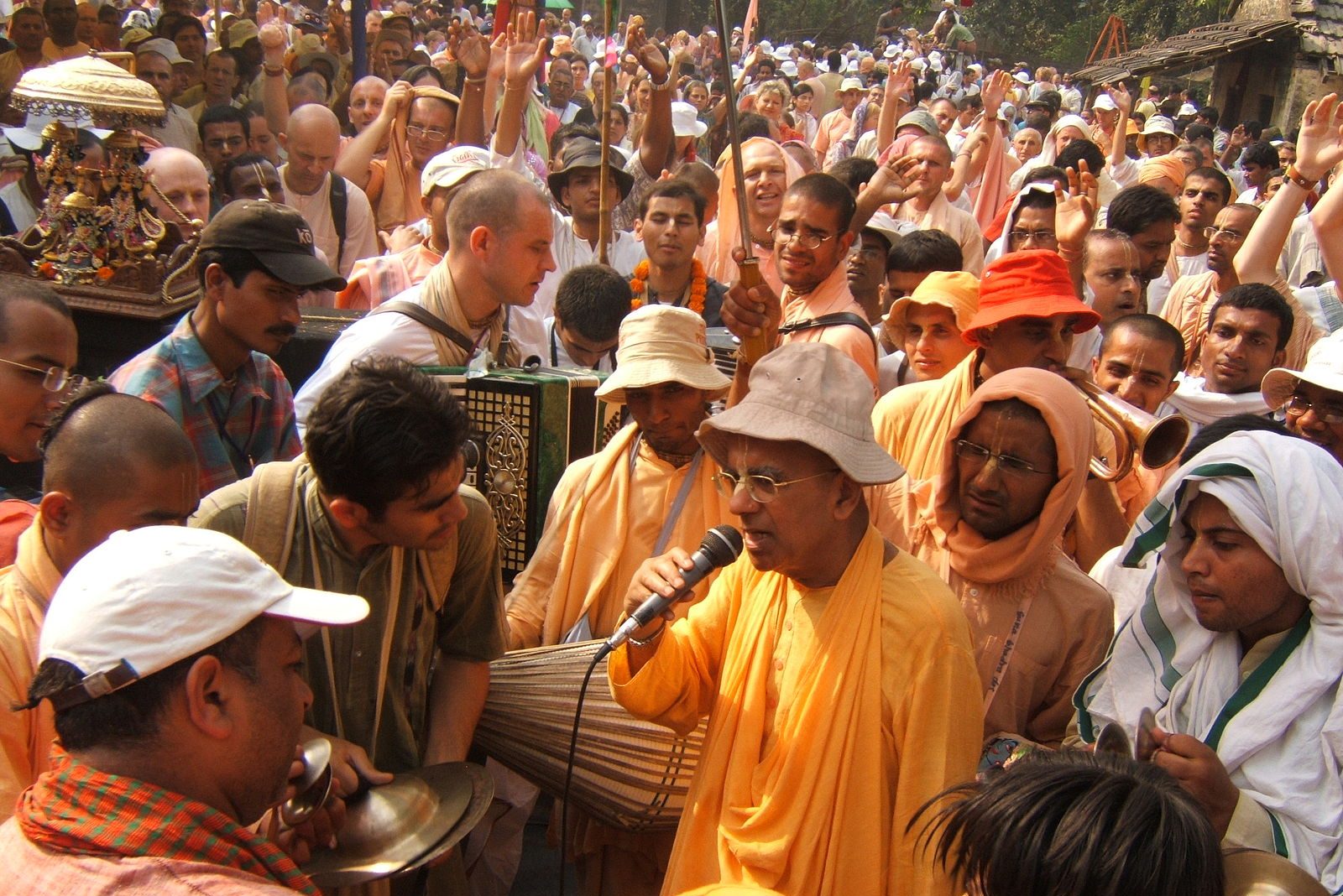
As sound vibration can affect the most subtle element of creation, it is interpreted in Hindu scriptures that spiritual sound vibrations can affect the atman (soul) in a particularly potent way. Such spiritual sound vibrations are said to have the ability to awaken our original spiritual consciousness and help us remember that we are beyond the ambivalence of life, and actually originate from the Divine. As such, the main goal of many types of Hindu musical expression is to help stir us out of our spiritual slumber by evoking feelings of love and connection that help us to better perceive the presence of the Divine within all. Some of the more popular examples of musical expressions within Hinduism include shlokas (verse, or poem), mantras (sacred syllables repeated in prayer), kirtans (congregational singing of mantras), and bhajans (devotional songs). You can find musical spiritual expressions through the US in temples, Mandirs, and community centers.
Yoga is considered Hinduism’s gift to humanity. At its broadest, yoga, from the root word “yuj” in Sanskrit, means to unite. Most Hindu texts discuss yoga as a practice to control the senses and ultimately, the mind. The most famous is the Bhagavad Gita (dating back to 6th-3rd Century BCE), in which Krishna speaks of four types of yoga – bhakti, or devotion; jnana, or knowledge; karma, or action; and dhyana, or concentration (often referred to as raja yoga, though not all sources agree on the term) – as paths to achieve moksha (enlightenment), the ultimate goal according to Hindu understanding. According to a 2016 study, in the United States there are an estimated 36.7 million people currently practicing yoga in the United States.
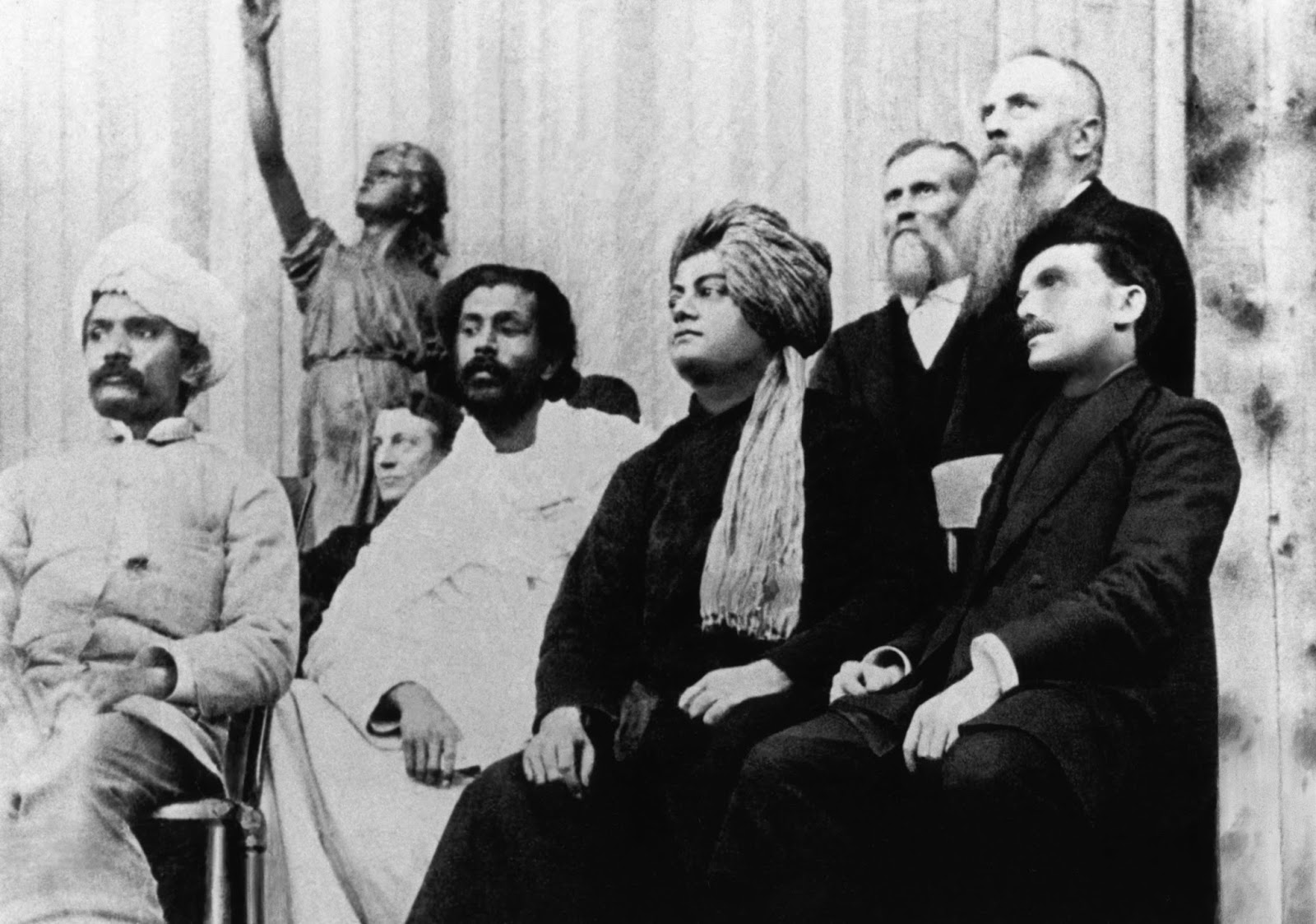
According to Vedic cosmology, 108 is the basis of creation, representing the universe and all our existence. As the soul is encased in two types of bodies: the physical body (made of earth, water, fire, air, and ether) and the subtle body (composed of intelligence, mind and ego), Swami Viveknanda is often attributed with bringing Hindu teachings and practices — such as yoga and transcendental meditation — to Western audiences. In 1893, he was officially introduced to the United States at the World’s Parliament of Religions in Chicago, where in his speech he called for religious tolerance and described Hinduism as “a religion which has taught the world both tolerance and universal acceptance.” The day that Swami Vivekananda delivered his speech at the Parliament of Religions is now known as ‘World Brotherhood Day.’ And his birthday, known as Swami Vivekananda Jayanti, is honored on January 12th each year. On this day he is commemorated and recognized for his contributions as a modern Hindu monk and respected guru of the Vedanta philosophy of Hinduism. In 1900, Swami Viveknanda founded the Vedanta Society in California and to date there are 36 Vedanta Society Centers in the United States.
According to Vedic cosmology, 108 is the basis of creation, representing the universe and all our existence. As the soul is encased in two types of bodies: the physical body (made of earth, water, fire, air, and ether) and the subtle body (composed of intelligence, mind and ego), 108 plays a significant role in keeping these two bodies healthily connected. Hindus believe the body holds seven chakras, or pools of energy, which begin at the bottom of the spine and go all the way down to the top of the head and it is believed there are 108 energy lines that converge to form the heart chakra. Ayurveda says there are 108 hidden spots in the body called marma points, where various tissues like muscles, veins, and ligaments meet. These are vital points of life force, and when they are out of balance, energy cannot properly flow throughout the body. Sun salutations, yogic asanas that honor the sun god Surya, are generally completed in nine rounds of 12 postures, totaling 108. Mantra meditation is usually chanted on a set of 108 beads. In Hinduism there are 108 Upanishads, the sacred texts of wisdom from ancient sages. Additionally, in the Sanskrit alphabet, there are 54 letters. Each letter has a feminine, or Shakti, and masculine, or Shiva, quality. 54 multiplied by 2 equals 108. Ultimately, breathwork, chanting, studying scripture, and asana’s help harmonize one’s energy with the energy of the supreme spiritual source. These processes become especially effective when they are performed in connection with the number 108. Hindu scriptures strive to remind people of this divine commonality by continuously highlighting the innumerable threads connecting everything in existence. One of these threads is the number 108.
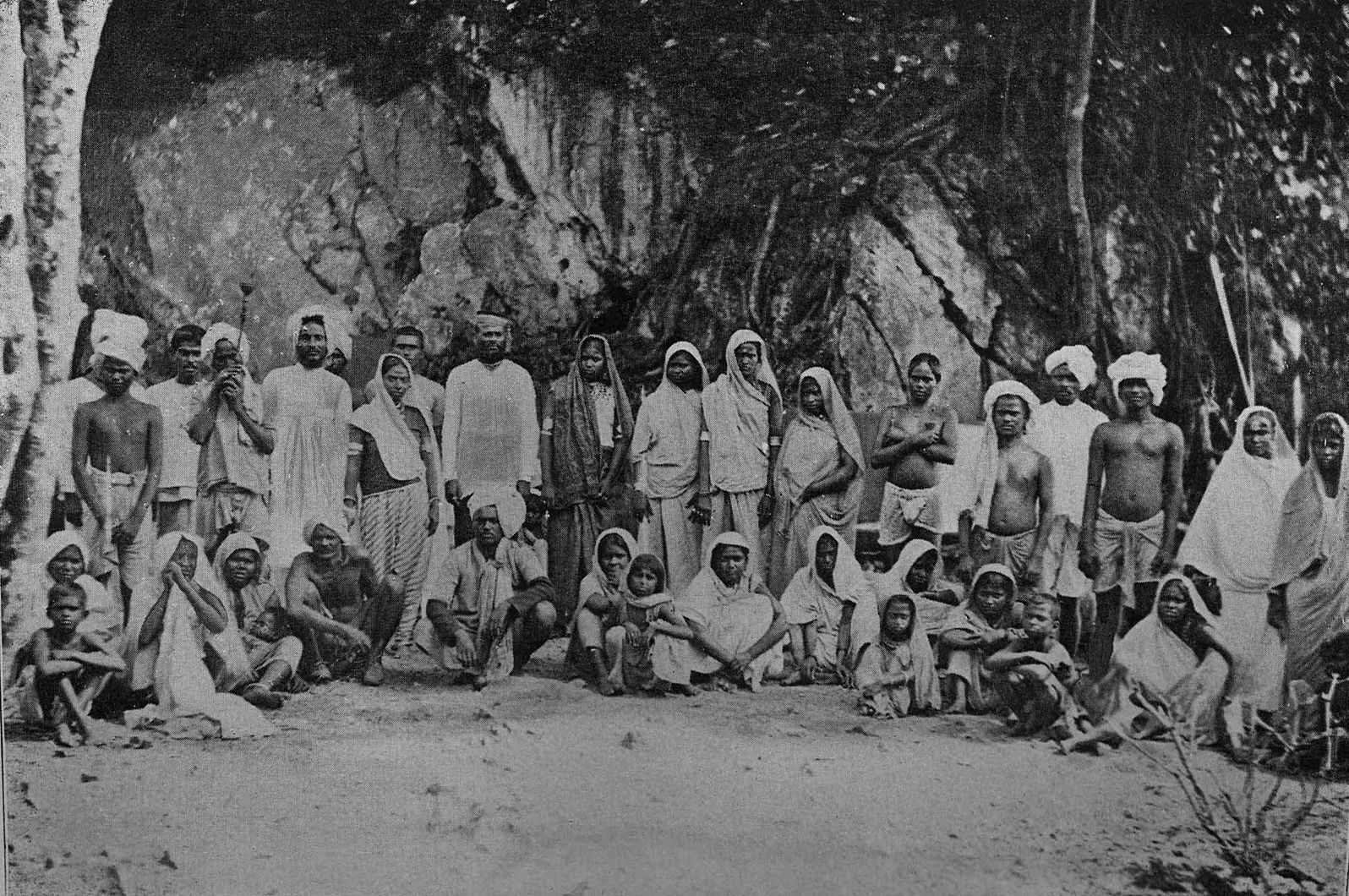
A decade after slavery was abolished in 1834, the British government began importing indentured labor from India to work on their estates in other countries such as Trinidad and Tobago. From 1845 to 1917, the ships would continue to arrive, carrying over 140,000 Indians to the island, facilitating Trinidad's population growth from Indian laborers. Today, there are roughly 240,000 declared Hindus in Trinidad and Tobago, comprising about 18% of the island’s population. There are a total of about 300 temples on the island, welcoming all who wish to enter and where many beloved Hindu festivals take place. But for some, the migration journey doesn’t end as New York and Florida have seen the development of large Indo-Caribbean communities.
From ancient tribes to present-day devotees, tattoos have held a special place in Hinduism for centuries. In the Indian states of Bihar and Madhya Pradesh, the Ramnaami community invoked Rama’s protection with tattoos of the name “Rama” in Sanskrit on every inch of their skin, including the tongue and inside the lips.The Mahabharata tells the story of the Pandavas that were exiled to the Kutch district of Gujarat. Today, their descendants - members of the Ribari tribe - live as their ancestors did, with women covered in tattoos that symbolize their people’s strong spirit for survival. Some Hindus consider tattoos as protective emblems,such as tattoos of Hanuman are often used to relieve physical or mental pain. People will often get tattoos of other deities to invoke their blessings. Mehndi, a plant-based temporary tattoo, is commonly done at weddings and religious ceremonies as a form of celebration of love and spirituality. While tattoos have been in Hindu communities for centuries, tattoos as symbols of honor, devotion, and even fashion are incredibly popular today. Hindus and non Hindus alike adorn themselves with Hindu emblems and tattoos that reflect Hindu teachings.
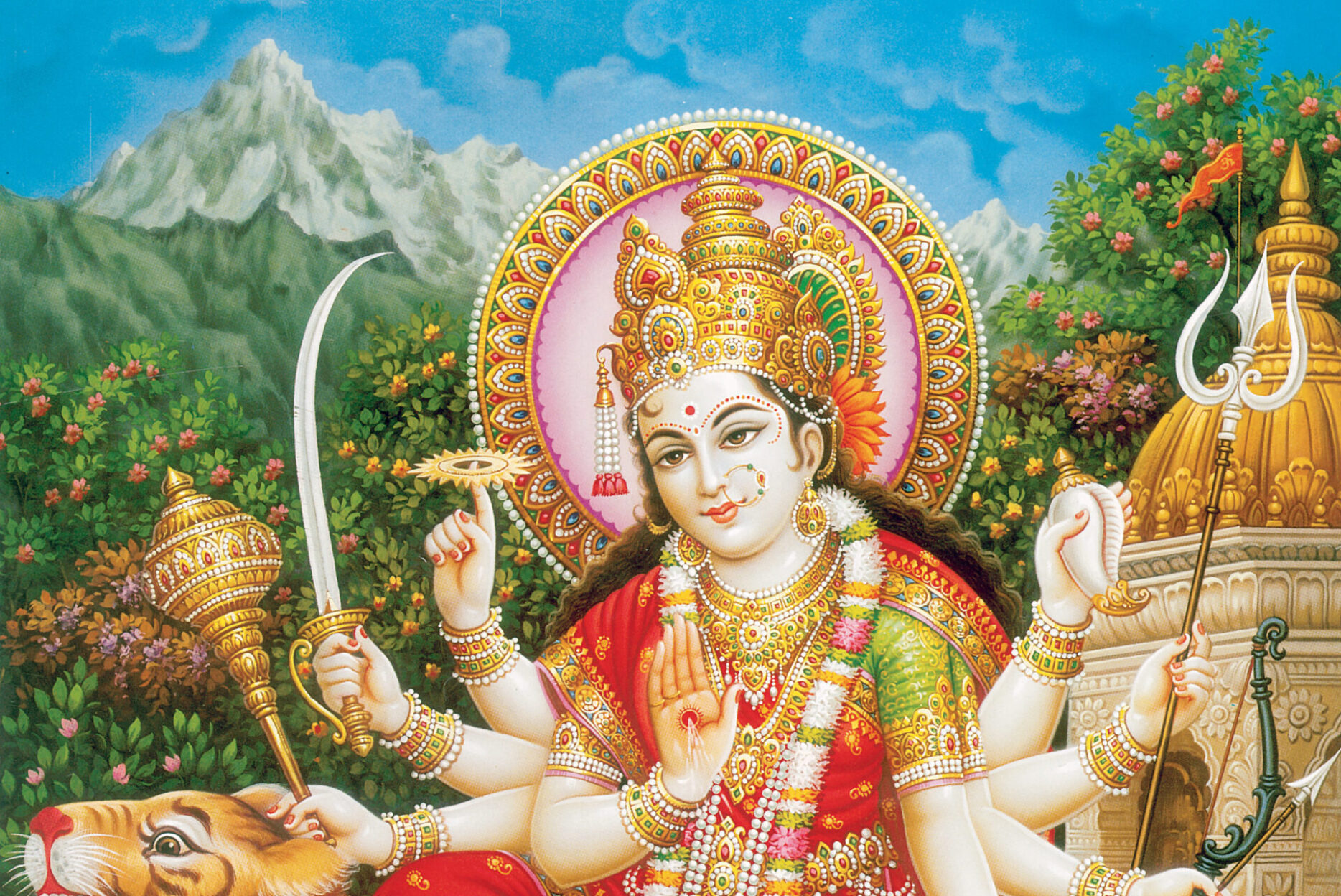
Navaratri (nuhv-uh-RA-three) is a nine night celebration of the feminine divine that occurs four times a year — the spring and fall celebrations being amongst the more widely celebrated. Some traditions honor the nine manifestations of Goddess Durga, while others celebrate the three goddesses (Durga, Lakshmi, and Saraswati) with three days dedicated to each. This is a time to recognize the role in which the loving, compassionate, and gentle — yet sometimes powerful and fierce — feminine energy plays in our lives.
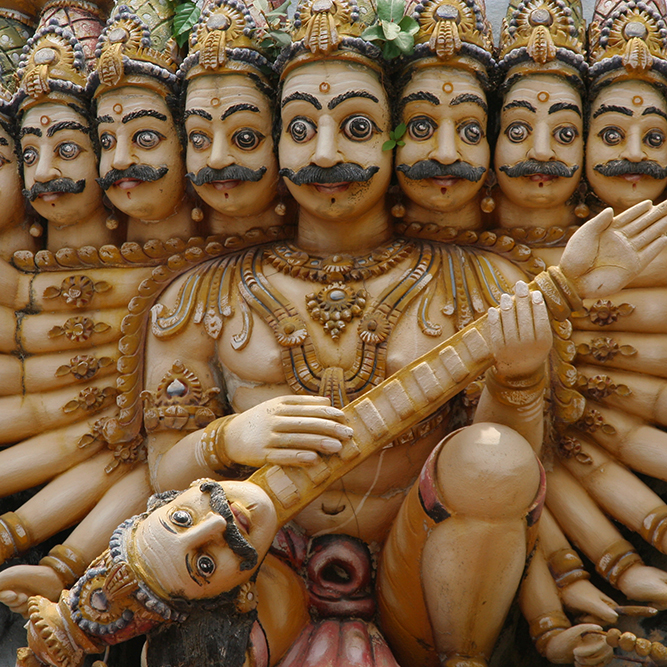
Dussehra (duh-sheh-RAH) or Vijayadashmi (vi-juhyuh-dushuh-mee) celebrates the victory of Lord Rama over the ten-headed demon King Ravana. This also marks the end of Ramalila — a brief retelling of the Ramayana and the story of Rama, Sita, and Lakshman in the form of dramatic reading or dance. It also signifies the end of negativity and evil within us (vices, biases, prejudices) for a fresh new beginning. Dussehra often coincides with the end of Navratri and Duga Puja, and celebrations can last ten days, with huge figures of Ravana set ablaze as a reminder that good always prevails over evil.
Many Hindus hold reverence for the cow as a representation of mother earth, fertility, and Hindu values of selfless service, strength, dignity, and non-harming. Though not all Hindus are vegetarian, for this reason many traditionally abstain from eating beef. This is often linked with the concept of ahimsa (non-violence), which can be applied to diet choices and our interactions with the environment, and potentially determine our next birth, according to the doctrine of karma. This is part of the reason that some Hindus may choose a vegetarian lifestyle as an expression of ahimsa as well as explains the growing number of cow protection projects that are led by individuals who have felt compelled to put their Hindu values into practice. The US is home to several cow protection projects and sanctuaries
Dairy Is Traditionally Sattvic Food, but the Way We Treat Cows Today Can Be Tamasic
Cultured Meat and Animal-Free Dairy Upends the Plant-Based Food Discussion
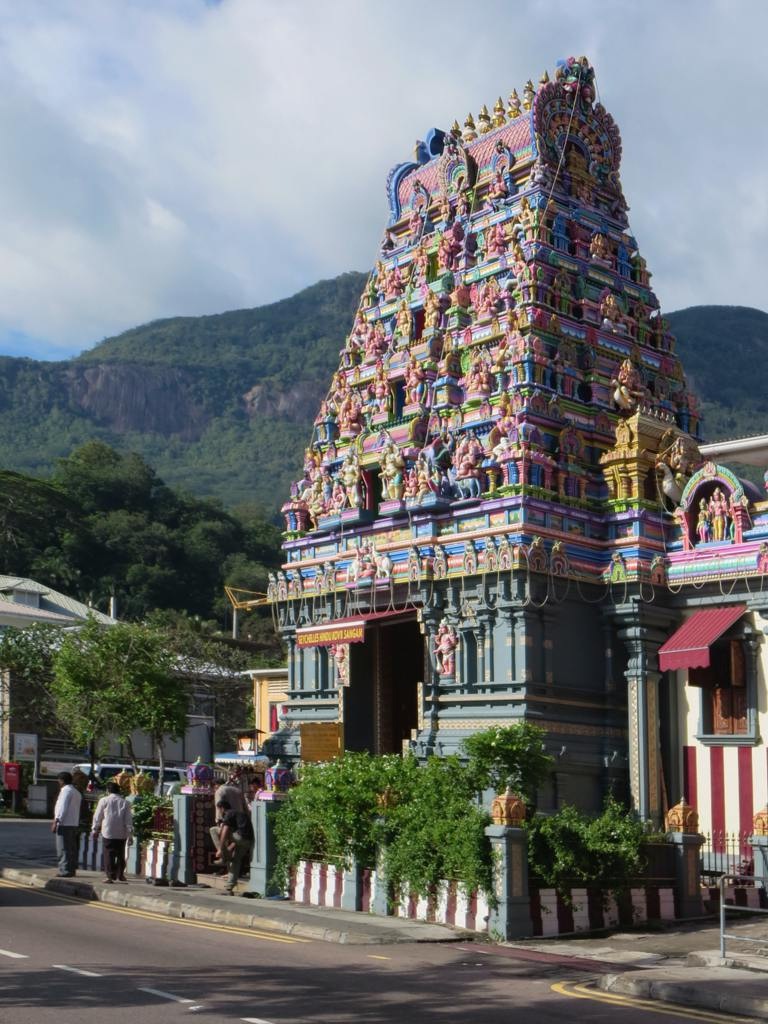
The Immigration and Nationality Act of 1965 facilitated the journey of many Indian immigrants to the United States. In this new land, many created home shrines and community temples to practice and hold pujas (services). As Hindu American populations grew in metropolitan and rural areas, so did the need to find a permanent temple site for worship. In 1906, the Vedanta Society built the Old Temple in San Francisco, California but as this was not considered a formal temple, many don’t credit this with being the first. Others believe it is the Shiva Murugan Temple built in 1957 in Concord, California, whereas others believe it is the Maha Vallabha Ganapati Devanstanam in New York that should be considered the first. Today, there are nearly 1,000 temples in the United States . Regardless of where you live, you have the right to practice your faith.